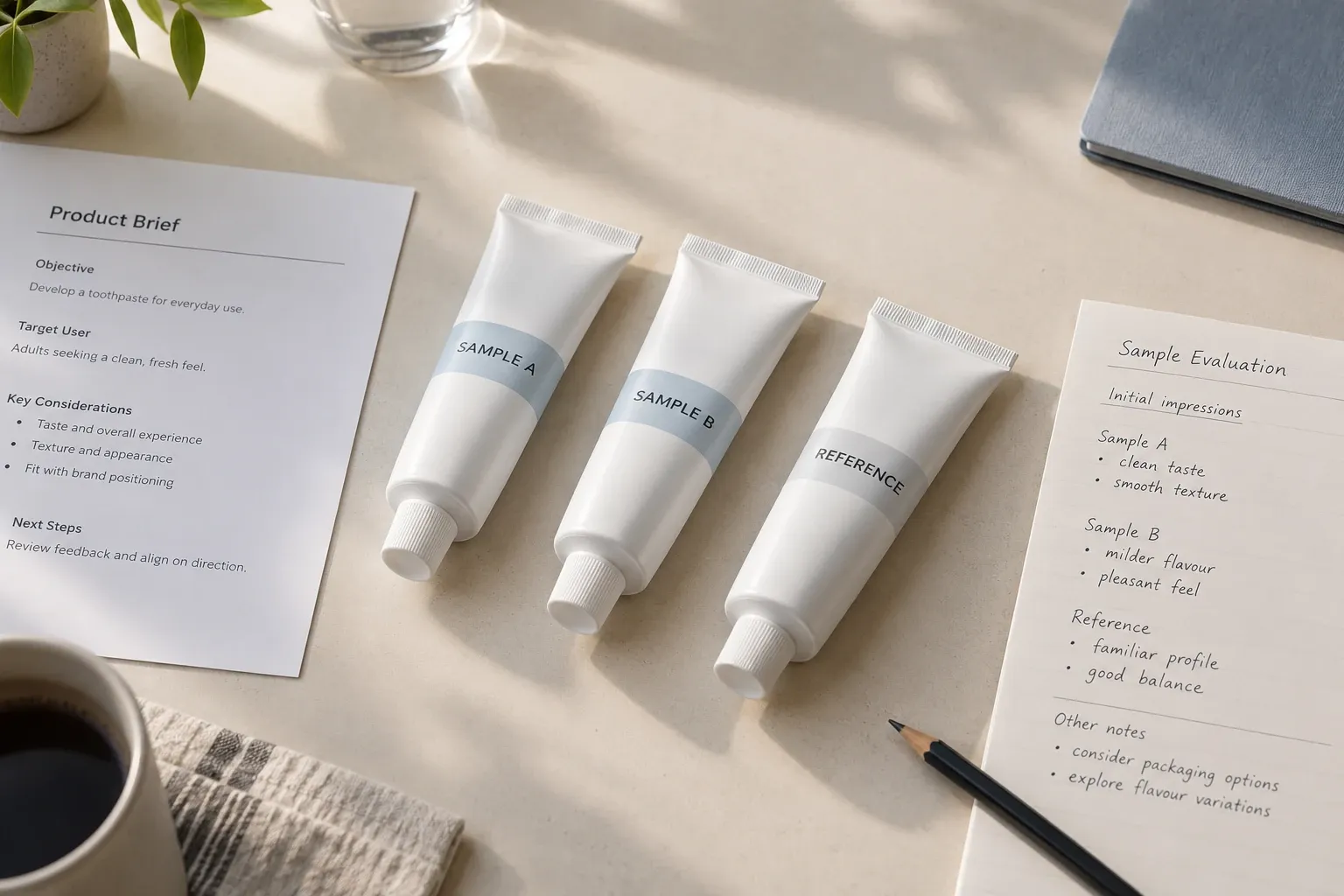
To evaluate toothpaste samples for a private-label project, compare each version with your agreed product brief, describe the characteristics separately, and give the manufacturer a clear list of changes and features to retain. Record any technical questions still open before agreeing on the next development step.
This gives your team a practical basis for three decisions: whether the sample matches the intended experience, what needs revision, and what you are ready to confirm. The checklist and feedback worksheet below are suggested tools for buyer–manufacturer discussions. They organize your observations; they do not replace product testing or establish consumer acceptance.
1. Start with the Product Brief and the Sample Version
Begin by identifying exactly what you have received. A formula sample in a temporary container and a sample in the proposed retail tube answer different questions. Confirm the sample's intended evaluation purpose with the manufacturer before reviewing it.
Start your review record with the following header. Keep it attached to the feedback, revision and decision records that follow.
Review header | What to enter |
|---|---|
Sample and brief version | The manufacturer's sample code or version and the agreed brief it relates to |
Reviewer and date | The person or team making the observations and the review date |
Evaluation purpose | Whether this review covers the formula, packaging or their combination |
Product target | Intended users and the flavor, sweetness, cooling, foam and texture characteristics agreed for the project |
Reference product | The agreed comparison product, if any, and the characteristics you want to approach or change |
Packaging status | The actual container supplied and whether it represents the proposed retail pack |
Comparison conditions | The agreed approach and relevant differences between reviews |
If there is no reference product, agree on descriptive targets with the supplier. A preference such as “a mild mint profile with restrained sweetness” can start that discussion; ask the supplier how it will be interpreted for the sample. Keep your team's preferences distinguishable from requirements already agreed in the brief.
Agree on consistent comparison conditions, following the manufacturer's instructions for the sample. Record relevant differences between reviews, such as a different toothbrush or sample container. These notes give you and the supplier context when discussing differences between samples.
2. Use a Toothpaste Sample Evaluation Checklist
Describe the Sensory Experience
For each attribute, make two notes: what you observed and how it fits the brief. This keeps a description such as “more foam than the reference” separate from the decision that the foam level needs changing.
Use the following suggested checklist for toothpaste sample evaluation. Where an item cannot be assessed, record the reason.
Attribute | What to describe | What to compare with the brief |
|---|---|---|
Flavor | The recognizable flavor character and its perceived intensity | Does it match the agreed flavor direction? |
Sweetness | How sweet the sample tastes relative to the reference or descriptive target | Is sweetness where the project needs it? |
Cooling sensation | How strong the cooling feels and how long it seems to remain | Does its intensity and persistence fit the intended experience? |
Foam | The perceived amount and feel of the foam during use | Does that foam experience suit the target product? |
Texture and mouthfeel | Perceived smoothness, thickness, graininess or other noticeable sensations | Which characteristics match the target, and which need discussion? |
Aftertaste | The taste that remains after use | Does the finish match the intended flavor experience? |
Perceived foam amount and liking are separate questions. A published toothpaste study by Colgate-Palmolive researchers assessed them separately in its questionnaire. For your review, record both the observation and its fit with your brief; that study does not establish a preferred foam level for every product or audience. Toothpaste foam study, Methods 2.2.1.
Describe uncomfortable sensations separately from flavor and cooling intensity. A comment such as “too strong” needs clarification before the supplier can understand what you experienced. The observation alone does not identify which ingredient caused it.
Record Dispensing and Package Handling Separately
Add a separate handling note tied to the container you actually received. Describe the effort needed to dispense the paste, whether it forms a string or separates cleanly from the opening, and how it sits on the brush. Note any difficulty using the closure.
If the sample is supplied in temporary packaging, keep those observations associated with that container and discuss what still needs checking in the proposed retail pack. Ask the manufacturer to assess the relationship between the formula and packaging before requesting a formulation change solely to address a dispensing observation.
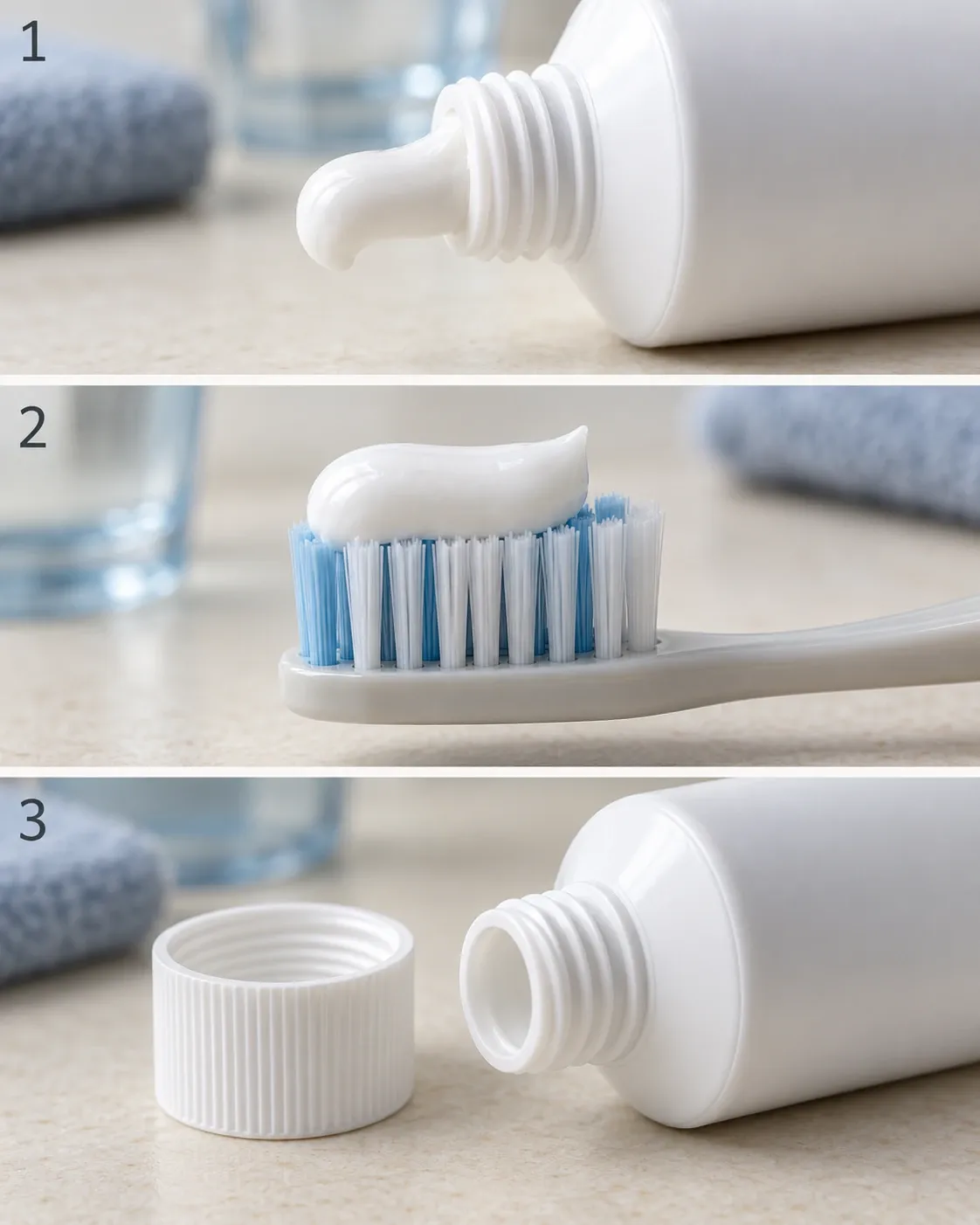
This distinction also appears in the scope of ASTM E3288-22: its trained sensory-assessment guidance excludes packaging, product/package interaction and dispensing. The checklist here is a buyer discussion tool, not an implementation of that standard. ASTM E3288-22, Significance and Use.
3. Turn Observations into Clear Sample Feedback
Useful toothpaste sample feedback connects an observation to a requested outcome. “Too thin,” for example, needs a location and context: are you describing the paste as it leaves the tube, how it sits on the brush, or its feel during use? State what happened and how it differed from the target.
Use one copy of the following suggested feedback record for each issue, linked to the sample details you recorded earlier. Complete the buyer feedback first; add the supplier's response after discussion.
Field | What to record |
|---|---|
Attribute and observation | The characteristic you reviewed and what you noticed |
Target or reference | The agreed requirement and the difference you want addressed |
Requested change | The intended result for the next version |
Characteristics to retain | Features of the current sample that already fit the brief |
Priority | Which change matters most if the requests involve tradeoffs |
Supplier response — after discussion | Feasibility, tradeoffs and questions to resolve |
Describe the result you want the formulator to assess. For example, request a lower perceived cooling intensity rather than specifying an ingredient change without supporting formulation information. Ask what other characteristics may be affected and identify which ones matter most to your brand.
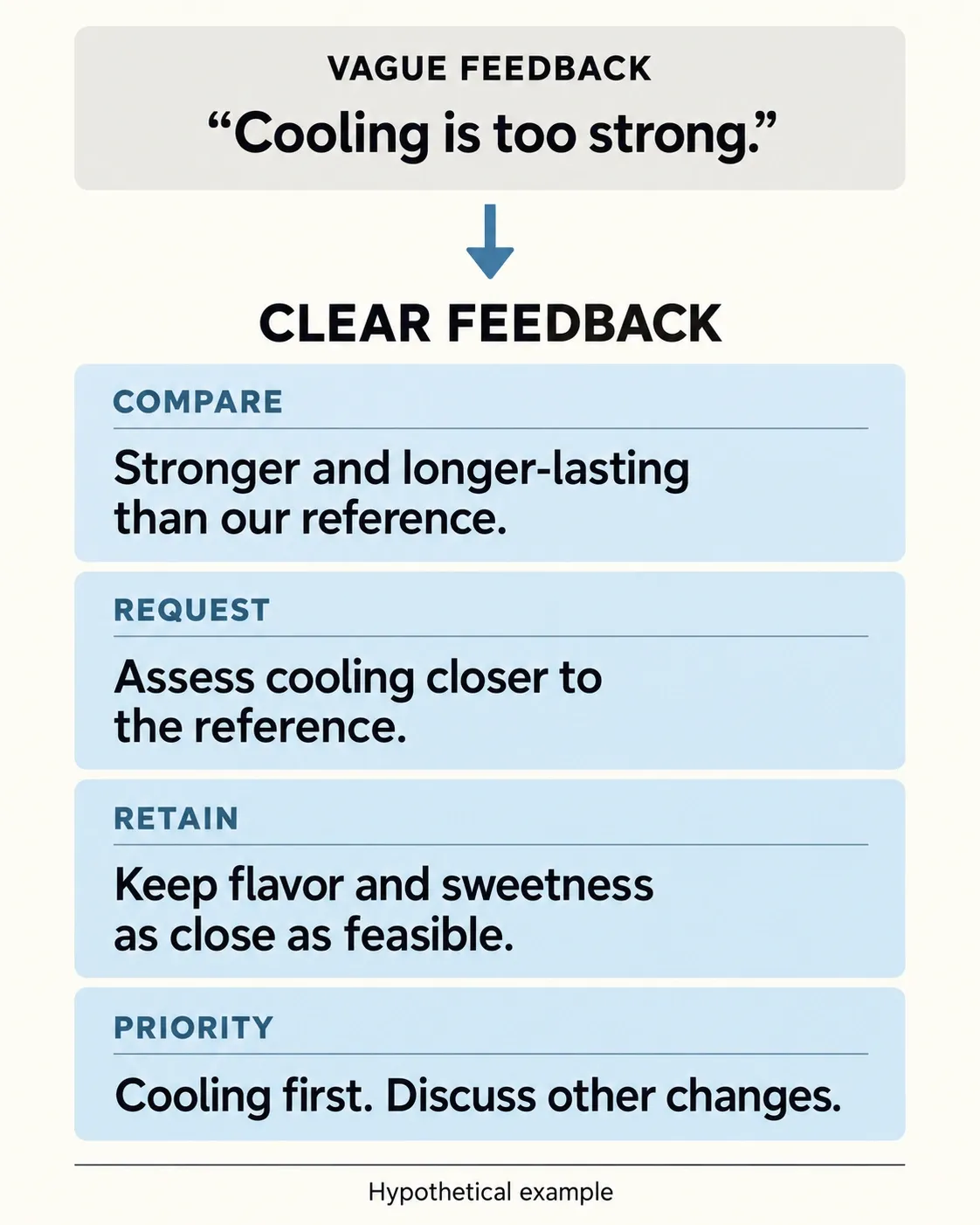
Hypothetical sample-feedback example — not a customer case or test result
An initial comment might be: “The cooling is too strong.” A more specific message would be:
The cooling feels stronger and lasts longer than in our agreed reference. Please assess a revision with cooling closer to that reference, while keeping the current flavor character and sweetness as close as feasible. Cooling is our main revision priority. Please let us know which other sensory characteristics may change so we can review them in the next sample.
The example identifies a comparison, a requested change, characteristics to retain and a priority. It also leaves the formulation assessment with the manufacturer. The observations are hypothetical; a real request should use your team's actual notes.
4. Compare the Revised Sample with the Previous Version
When a toothpaste sample revision arrives, add its version to the same feedback record. Review it against the agreed target and the earlier observations, using comparable conditions where appropriate. If the brief has changed, make that change explicit.
For each feedback item, append this revision block to the original issue record:
Revision field | What to enter |
|---|---|
Revised sample and review | The new version, reviewer and date, plus any changes to the brief, container or comparison conditions |
Outcome of the requested change | What you now observe and whether it addresses the original gap |
Characteristics to retain | Whether the features you wanted to preserve still fit the brief |
New observations | Any additional difference that needs discussion |
Issue status | Resolved, still open or awaiting clarification, with a brief reason |
Keep this block with the original observation and request so the supplier can follow what changed. If feedback comes from several reviewers, retain their individual observations and any disagreements in the record.
5. Identify the Technical Questions Still Open
Use sensory observations to describe the product experience. Claims about cleaning or whitening efficacy need separate supporting evidence; ASTM E3288-22 excludes overall clinical effects or benefits from its scope. ASTM E3288-22.
Texture observations also need careful interpretation. Perceived graininess is not a measurement of abrasivity. Relative Dentin Abrasivity, or RDA, is determined through a standardized assessment; the ADA also cautions against using RDA values to rank toothpaste safety. American Dental Association: Toothpastes.
Keep a separate list of technical questions relevant to your specification, intended claims, packaging and destination market. Include questions about microbiological quality, shelf life and packaging compatibility as applicable to your project. In the supplier discussion, establish:
- Which supporting documents or tests are relevant to those questions.
- Which formula, sample or packaging configuration the available evidence covers.
- What remains outstanding and at which agreed development stage it will be addressed.
You can confirm a defined aspect of the sensory experience while explicitly recording other work still open. Make the scope clear rather than treating every development decision as one all-purpose approval.
For an Airsun project, discuss the applicable specifications, reports and remaining questions through the testing and quality-control review. Document availability and any additional work depend on the product and project requirements.
6. Record the Decision and Agree the Next Step
Use the decision block below to record whether you are requesting another revision, seeking clarification or confirming specified characteristics of the sample. Enter the buyer's proposed decision first, then record the next action agreed with the supplier.
Closing field | What to enter |
|---|---|
Decision and scope | The sample version, whether you are requesting revision, seeking clarification or confirming, and the characteristics covered |
Outstanding evidence or questions | Remaining technical or packaging questions; identify the formula, sample or packaging configuration involved and any available supporting document |
Next action | The work or response agreed with the supplier |
Action owner and stage | Who will respond, at which agreed development stage, and the timing if agreed |
For example, a formula's sensory characteristics and its performance in the final retail package may be at different review stages. State that distinction in the record. Sample approval does not replace the checks required to release a production batch.
Airsun records sample confirmation through email and a confirmation form, and retains the confirmed sample as a reference for later production checks. The suggested worksheet in this guide can help you prepare your feedback; the project's confirmation record should identify what has actually been agreed.
To discuss the next sample step with Airsun, share your product brief, destination market, reference product if available, and observations or requested changes. Use the sample feedback and confirmation process to turn that review into a specific development discussion.
Ready to develop your oral care product?
Share your product idea, target market and packaging preferences. Our team can help you clarify the development brief and next steps.
Discuss your project